Showing posts with label film reviews. Show all posts

Friday, 5 June 2015

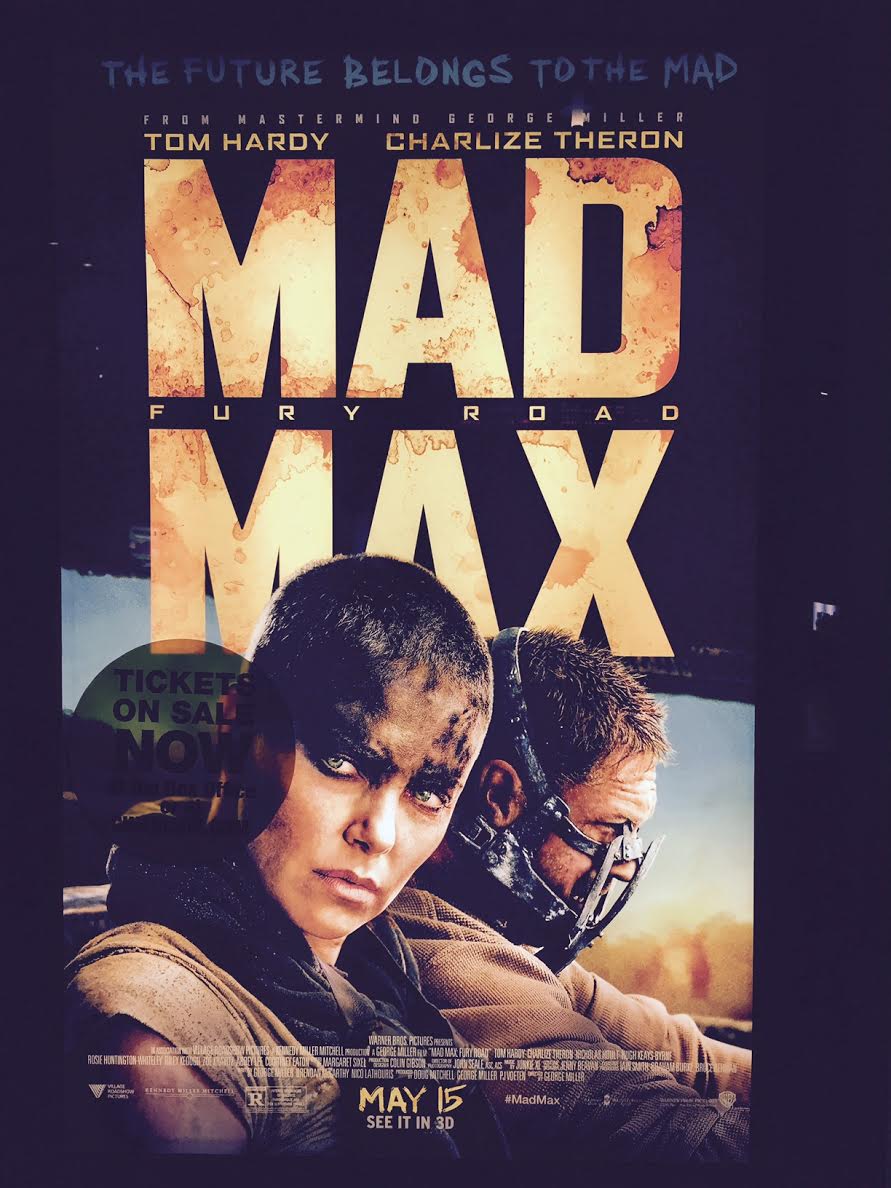
Film Fridays: Mad Max: Fury Road


When I first saw the Mad Max trailer, I almost shuddered. I honestly thought it looked like one of the stupidest movies I'd ever seen. Inexplicable babes and dystopian car chases and apparently nothing else. Then it opened, and Steven started hinting that we might want to go see it; the internet buzz was that it was fabulous. I started softening, and agreed to watch it. We watched two of the originals first, and I'd recommend it. Anyhow, we were way behind everyone else in seeing it because parents, but if you haven't seen it yet, rent the originals off iTunes (they're like $4) and then for heaven's sake hie yourself to the movie theatre and go see this movie because it is awesome. And probably wait to read this post, because spoilers.

Visually the movie is stunning. The scenery is incredible, especially for a barren wasteland, and the prop department must've had so much fun designing the vehicles-- everything, the polecats, the hot-rod tank, the costuming, the engine-based religion, all harks back to and expands on the offbeat motorcycle-gang world introduced in the original, but taken to an epic scale. 

Actually it felt like that progression in a lot of ways. The original was a (kind of awful yet oddly beautiful yet weird) very intimate story in the midst of apocalypse. No cities levelled, no epic battles, just open road and a few motorcycles and cars, really; a story about a family. The second one expanded the scale to a settlement big enough to need a bus to get around. From the looks of the trailer the third is a slightly larger world still. And then this, a handful of cities. Really, it's still quite small, Joe's territory not more than a day's journey around. But the environment got harsher, the cultures stranger, the violence broader, and Max himself more laconic and withdrawn.

It's no secret this is being hailed as a feminist film, but really what I really loved about it was it was just a great story. The women didn't feel like tokens, like cardboard cutouts, like embodied concepts about feminism, but like real humans beings with passion and resonance and variety. You know, like women actually are.

So, here I go with the breakdown:

Role of Women: In the world of the film, the women of the Citadel are breeders. The most telling line to me was just a casual comment between two of the warboys after the Five Wives are discovered to be escaped along with Furiosa: "She took a lot of his [Immortan Joe's] stuff." "What stuff?" "His breeders." Although Furiosa is entrusted with driving a war rig, most of the women we see in the Citadel are caged and controlled: the nursing mothers hooked up to constant breast pumps, the wives in their warren. In the commentary of the film, though, the women are, to quote, "not things." The moment when you first see the Wives, slender, sparsely clad and luscious, (described in the previous link as "what would happen if someone decided to heavily arm a Burberry ad"), the knee-jerk reaction is to assume they're what they look like, what they would be in almost any other action movie: eye-candy. My gut reaction was to object, as I would in any other action movie. But, of course, in the story eye candy was what they were, the role they had been forced into by nature of their lives. But the story took you beyond that. Into their loyalty, dignity, and ferocious passion to be free. Early in the movie, during the first chase into the dust storm I think it was, a war boy drops into the vehicle. The five young women, out in the rough, dark world for the first time in their lives, with no knowledge of weapons, with soft hands and long flowing hair and smooth skin, pounce on him, grabbing and biting, their drive to be free crackling across the screen. I swear, in any other movie ever those women would've been screaming and cringing. It was a beautiful moment to see onscreen. Another equally beautiful one was when the heavily-pregnant Angharad places herself and her child between the man who had owned and abused her, and the woman who was helping her escape. Her dignity in that moment was palpable. Great article that outlines a little more of this aspect here.
Sexualisation of Women: Coming out of the theatre, I was reminded of the movie Sucker Punch, the one and only movie I walked out of midway through at the theatre. It purports to be a story about young women fighting back against sexual abuse, but the moviemakers sexualised the actresses so heavily that it felt like it was spitting in its own face. Fury Road was the opposite. A story about women sexualised and abused and objectified completely by their world, who are not at all sexualised in the film. No panning shots up their legs. No suggestion that the hero is entitled to sexual access to them by virtue of helping them (see Skyfall). Even the way they were dressed, which could easily have been presented very sexually, was instead a piece of storytelling, an imposition on them from outside that didn't detract from their dignity and strength. 
Bechdel Test Pass/Fail: Pass, of course. 
Male:Female Ratio: The pursuers are exclusively male, and there are a lot of them, so in that sense they outnumber the females, but of the characters you get to know and connect with, females outnumber. Outnumber, yes. 

Are you buying your movie tickets yet? Need more convincing? Everything here. 
Still not convinced? Look at this picture of Road Warrior Mad Max and COME ON.

Oh, and one final good moment. At the end of the film, the lactating mothers you saw at the beginning, they ones who just felt like props establishing the place of women in this society as, like, human cows? They're the ones who step out and open the water gates. They are not things, either.

Friday, 18 July 2014

What the...?


Dear Creators of The Great Mouse Detective (1986),

Please explain to me how this is an okay character to include in a kid's movie. Especially a kid's movie that includes (up to this point, because I turned it off STAT) only four female characters (housekeeper, little girl/catalyst for male action, buxom pub waitress and this sultry number). Especially as a whole suggestive musical number with lyrics like "Boys, what you're hopin' for will come true, let me be good to you," and "Hey fellas,  I'll take off all my blues/Hey fellas, there's nothing I won't do just for you,"  and not just a passing shot. LIKE ACTUALLY. How is this okay?

Saturday, 21 June 2014

Film Review: Haute Cuisine


Haute Cuisine (based on the true story of Danièle Delpeuch) tells the story of Hortense Laborie, appointed to be personal chef to the President of France. Before we get to the nitty-gritty of the film, can I just say that the food in the movie was so beautiful? I wanted to cook the whole time I was watching it. And eat. I really wanted to eat.

Role of Women: I loved the main female character. She is gracious, competent, passionate, staunch. She's unafraid of adventures, travelling from the President's private kitchen to a remote Antarctic base. She's an artist. She's a little bit unruly, running the kitchen her own way despite the strict rules that surround her. She's wise.
Sexualisation of Women: There are some coarse moments in the film, a few jokes from male characters about the only woman around. Broadly, though, Hortense is valued for her character, personality, and talent, not her body.
Bechdel Test Pass/Fail: Pass. Hortense has conversations with the President's secretary (not sure she was named; it was all subtitles so I might just have missed it), and with the journalist in Antarctica.
Male:Female Ratio: There's only four or five female characters. This is part of the plot, of course, as Hortense forges her own path through the male-dominated world of the palais kitchens. I think they did a good job of not overemphasizing it, that is, the plot was more about the rules and restrictions of the palais versus Hortense's passionate, artistic cooking style, but still.

Tuesday, 15 October 2013

Film Review: Gravity


Role of Women: Without wishing to give too much away about the film (and it's really hard to talk about it without spoiling it), I want to praise Gravity for giving a female a central, almost exclusive role in a film without resorting to cliches and tropes. In an earlier post I talked about how Hollywood tends to assume men won't watch films with a female central protagonist, but everyone I know who has seen this film has nothing bad to say about it-- certainly they don't mention how boring it was to watch a movie all about a woman! Dr. Ryan Stone is educated (in a STEM field), capable, and courageous, and yet also vulnerable, emotional, and caring-- palpably human with all the diversity that involves. It is rare for films to straddle that line in a female character; most tend to divide women into tough, "manly" types who are capable, independent, and unemotional, and gentle, "womanly" types who need rescuing and are nurturing. Bravo to this film for making their heroine a woman who, like most of humanity, has strengths and weaknesses, areas of capability and vulnerability, something to offer as well as some areas of neediness.

Sexualisation of Women: Clooney's character Matt Kowalski is more stereotyped than Dr. Stone, as a bit of a rogue or charmer, and he is guilty of the small instance of sexualisation in the film. In the throes of a life-threatening situation in space, he teasingly invites Dr. Stone to admit she's attracted to him. It's small and subtle, but it is an implied imposition of sexuality that by no means need be present.

Dr. Stone spends several scenes dressed only in the tank top and fitted shorts she wore under her spacesuit, but it didn't feel at all sexualised to me. The scenes draw heavily on a "rebirth" subtheme and she is never posed sexually while dressed like this; her body is acknowledged without being either vilified or objectified and I appreciated that.


Bechdel Test Pass/Fail: Fail. The other female in the film dies without any dialogue. There was a fine opportunity to include a conversation with a women when Dr. Stone makes radio contact with Earth, but the voice on the other end is the Hollywood default: a male. 

Male:Female Ratio: Of the seven characters in the film, two are female. One dies without any dialogue.

Wednesday, 7 August 2013

Film Review: Man of Steel


Role of Women: To be honest, it's hard to tell where the portrayals of women in Man of Steel were flat or stereotypical because they were women, and when they were just flat and stereotypical because they were characters in Man of Steel, since one of the main criticisms I have of the film as a whole is the one-dimensional, underdeveloped characters. They had the usual suspects of hardboiled/tough girls-- Captain Farris, Faora, Lois Lane (who claims she gets writer's block if she's not wearing a flak jacket)-- and tender, motherly types-- Martha Kent, Lara-- none of whom ever really did anything to catch you off guard. The angst, suspense, and tension mostly lay between male characters. Clark's human father teaches him to believe in but also hide himself, leading to a relationship with currents of respect and resentment mingled; Clark's human mother gardens and has dogs and believes the best of Clark no matter what. Jor-El gets all the action in challenging the Kryptonians' self-destructive genetic selection and pointing out the end of the world, while Lara gets to be indecisive and mostly passive/background; do you really think she went through a natural pregnancy and childbirth because she was sort of thinking maybe Jor-El had a point about the end of Krypton? I have a feeling she would've needed a lot more courage and conviction than portrayed. It would've been pretty awesome if Lara had've been uploaded onto the ship as well as/instead of Jor-El, and really there's no reason why she needn't have been. Just Hollywood defaults.

Sexualization of Women: Why do filmmakers insist on putting women who need to run in ridiculous platform heels? Don't they realise that in real life either the heel would break, or the character's ankle? Other than that, though, they did fine on this front, with one exception-- when they had Captain Farris remark with a girlish smirk to her commanding officer that she thought Superman was "kinda hot". Considering the grit and dedication she would've had to display to get to her current position, is that really the sort of thing she would be likely to say to an authority figure in her job? Even if she did think that, I humbly suggest she would've had the self-control to keep it to herself. It just made her seem like a silly schoolgirl instead of a hardworking woman. 

Bechdel Test Pass/Fail: Iffy. Lois and Jenny have an exchange ("Why is the printer out of toner?" "You have got to come see this...") which is not in the strictest terms a conversation; more just two unrelated sentences tossed at each other. Given the relatively higher number of female characters in this film, you'd think they could've managed to give at least two of them meaningful dialogue that didn't directly involve a male. 

Male:Female Ratio: In terms of presence of women, this film did pretty well (especially compared with its counterparts in the same genre which often feature only one or two token females). Pretty well all the male main characters had a female counterpart-- Zod and his second-in-command Faora, Clark and Lois, Jor-El and Lara, Clark's parents,  Perry and Jenny, General Swanwick and Captain Farris. It is telling, however, that every single male main character holds the role of authority or action, while the females really are 'counterparts': second-in-commands, supporters, love interests, and underlings.

So, overall, not awful like some superhero movies can be (don't get me started on Iron Man 3...) but by now means a shining star either.

Saturday, 15 June 2013

Film Review: Heart: The Marilyn Bell Story

Heart: The Marilyn Bell Story is a Canadian film about a Canadian hero: 16-year-old Marilyn Bell, who in 1954 attempted the longest swim on record, a grueling 52-kilometer swim across Lake Ontario. It's a simple story-- told far more simply than if it had been made in Hollywood-- but I really liked it. It was well-acted, and the swim and the odds against Bell completing it drew me in.


Role of Women: What I loved about the way women were treated (with one exception) in this film is that they all but ignored a world where women are viewed as less. Marilyn faces opposition to her swimming dreams from many people at different points in the film: her mother doesn't think she can succeed, her coach initially refuses to train her because she's such a novice, her competitor, professional American swimmer Florence Chadwick, refuses to even acknowledge her as competition, and the CNE attempts to cut her out of the Lake Ontario swim altogether. But no one ever mentions that she can't do it because she's a girl. They say she's young, slight, an untested novice attempting a record-breaking swim-- but nobody ever says she shouldn't be pursuing her dream because of her gender. So many films of this sort make the heroine a scrappy, won't-be-put-in-a-box, chafes-against-the-social-conventions-of-the-day type of girl. There is a place for that, but it was very refreshing that they never had anyone criticize Marilyn because she was athletic, or have her coach, male fellow swim club members, or men in the press treat her as a sex object or as less valuable, and she in turn never needs to be resentful of her femaleness.

I also loved the vulnerability of Marilyn's character. Remember in my post One-Sided? I talked about realistic, interesting women? That's what Marilyn is. She's shy, but willing to advocate for herself despite feeling awkward. She's afraid of creatures in the water and swimming in the dark (and the poor girl gets attacked by lamprey eels in the water at night when she starts her epic swim) and needs the help of her coach's hardheartedness to push through her fears and carry on. She laughs, she cries, she has a good friendship with another girl in her swim club, they don't toss in a quick romance for the sake of the modern audience. In short, she's exactly the kind of character Hollywood could use a lot more of. Overall, I think the treatment of women in this film was very positive.

Sexualization of Women: Here's the one niggle I had with the film. Marilyn's opponent, the older, proven swimmer Florence Chadwick, in what I suppose to be an effort to make her seem more "villainous" and so up the tension of the film, is portrayed as a vain, selfish, glamour queen. From what I can find out on the Internet, she wasn't all that glamourous, but in the film they had her unabashedly using her sex appeal to manipulate the men around her, hanging out in her hotel room painting her toenails when everybody was waiting for her to start the swim, generally seeming to care more about her physical appearance than her sport or the world around her. Now, I can't say for sure, but this doesn't seem to me to be the kind of attitude that an extremely talented, successful long-distance swimmer like Chadwick would take towards her sport. Basically, the film implied that she used her glamorous looks and some suggestive behaviour to get the CNE executive to offer her the $10,000 prize for swimming Lake Ontario. I think the film could have created a sense of competition and shown Chadwick as an older, more worldly and experienced opponent without cheapening her like that. Still, this was one or two brief scenes in a movie that falls overwhelmingly on the positive side.

Bechdel Test Pass/Fail: Pass. Marilyn and her mother, Marilyn and her sister, and Marilyn and her good friend Joan all have plenty of conversations about things other than men (mostly about swimming).

Male:Female Ratio: 50:50! Nice-- just like the real world. Out of ten main(ish) characters, five were women.

Tuesday, 11 June 2013

One-Sided?

Someone remarked about the movie review I just did, "Role of women? What about the role of men? Isn't that a little one-sided?" I would like to address that here.

See, yes, it is one-sided. Just like the problem.

Because while there are certainly ways in which Hollywood stereotypes men and makes them one-dimensional and even sexualises them, there is nothing like the same kind of systemic, far-reaching problem as there is with the way women are portrayed in film.

Consider the following:
-According to a recent study by the Geena Davis Institute on Gender in Media, male characters have nearly three-quarters of the speaking parts in children's entertainment, and in family films, male characters outnumber females 3:1.
-The majority of movies do not pass the Bechdel Test, either featuring only one token female character, or by never having two females cross paths, or by putting two females together and having them only advance the plot on behalf of the male characters. Even more movies only pass the Bechdel Test by one conversation. Try to imagine a world where the reverse was true-- most movies only had one man and if there were two, they wouldn't ever speak unless to talk about the female main character.
-Except for in films made specifically for a female audience, the vast majority of leads are male.

I have to agree with Geena Davis' assessment. Have you noticed recently that the women in your life are hard to come by (drastically outnumbered by the males?) No? What about how they interact? Have you noticed that women tend to avoid each other like the plague unless they are getting together to talk about a man? No? Hmmm... Well, have you noticed that whenever you talk to a female you're bored to tears? Still no?

Okay, so now that we've established that that's not how the world works, I can establish why I want to approach film reviews from a perspective of the role of women. It's not because I think women are more important than men-- it's that I think they're just as important, and Hollywood is doing a terrible job of communicating that. If we aren't aware of just how one-dimensional and marginalized Hollywood makes their female characters, we will unwittingly absorb the message that women are more one-dimensional and less important than men. Like any of the subtle underlying biases in film, being aware of the problem is our best protection against assimilating the message. So I point out the maginalization of women in movies not because I enjoy complaining-- it's because I want change. I want people just starting out in film to think about why a man shouldn't enjoy a story about a woman, to think about what they're saying if they never make two female characters interact. I want movie-goers to come away from the theatre and to say, "The way they had that female character act was unrealistic because x," and then think about what real women are like and go out into the world with realistic, interesting women in their heads instead of a stereotype.

I've heard it said regarding this issue, "Once you see it, you can't unsee it." Thankfully, it's true. And once you're seeing it everywhere, you can become one more voice asking for something different-- something better.

Sunday, 9 June 2013

Film Review: Now You See Me

So, I thought I'd add a little intermittent feature to the blog where I review movies for their treatment of women, sexuality, relationships and roles. This week Steven and I went to see Now You See Me at an ill-advised 10:30 showing, so I'll start there.


Role of Women: It's nice to see that they had two female characters who were fleshed out beyond just "women who fall in love with men in the film" (although both of them did) I especially appreciated the character Alma Dray, the female Interpol detective whose intuitive, observational-- more feminine-- style of investigating is portrayed in a positive light against Rhodes' (supposedly) more aggressive, logical, "masculine" style. Often when films cast a woman in a military, police, or other more "combative" role, they work hard to make her seem tough, hardboiled, and no-nonsense. Dray uses co-operation, careful research, and intuition to make strides in the case that Rhodes would not have been able to make on his own, and I appreciated that portrayal.

Henley fared a little worse, especially at the hands of Merrit, who blatantly considers her merely as a sex object. Which would be okay, because there are men like that, except that she doesn't seem to mind at all when, for example, the first thing he does on meeting her is look her over and assess her value solely based on her appearance. Like, sure, that's not creepy at all.

Still, overall I think it did a lot better than many similar films. I could've done without Henley falling in love with J. Daniel Atlas despite him doing nothing to reform the arrogance and self-absorption that she dislikes in him at the beginning of the movie, and it's a bit funny that an Interpol detective would casually overlook her love interest's massive bank robbery but overall, I think the treatment of women in this film was fair-to-middling. (If only the character development of the film matched that, but that's a subject for someone else's film review...)

Sexualization of Women: Considering the strong precedent the filmmakers had to dress Henley in the traditionally skimpy costumes of women in magic, I was pretty impressed that they only had her in one such costume, when she's doing her solo work. And arguably that is realistic both because she was working in entertainment, and because of the trick she was doing (long heavy clothes would probably interfere with her lockpicking and escape from the water tank). Once she was with the Four Horsemen, she was generally not dressed in a revealing matter.

However-- whatever art team was in charge of the poster above totally missed the memo and thought cleavage, legs, and canting were the best way to portray her character. Where all the male characters communicate a sense of purpose, with straight-on glances and squared shoulders (except Freeman who is posed more to communicate his observational role in the movie), Henley has a sidelong, come-hither sort of glance/head pose and is dressed to display her sexuality instead of the drive and purpose she shares with the other three Horsemen.

Bechdel Test Pass/Fail: Fail. Features two (and only two) named female characters, but they never speak.

Male:Female Ratio: Out of eight main characters, two were female. That said, in modern day magic, rough estimates suggest that women make up only 3-8% of the professional magical workforce, so actually, I think, kudos to the filmmakers for casting a female magician and portraying her as a solid and talented solo act (instead of the sexy assistant role The Prestige filmmakers, for example, gave their magic lady.)